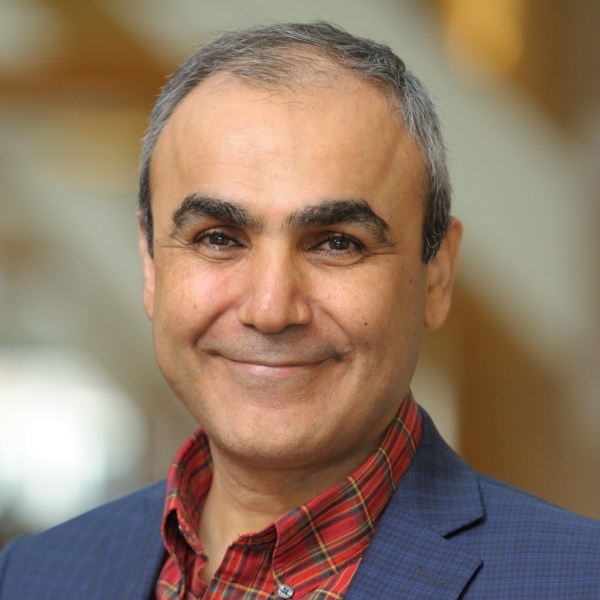
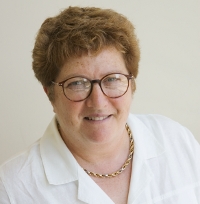
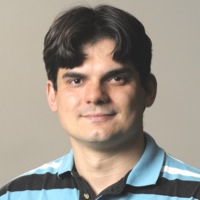
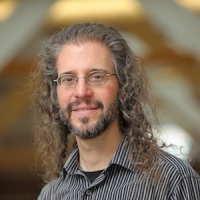
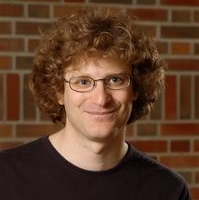
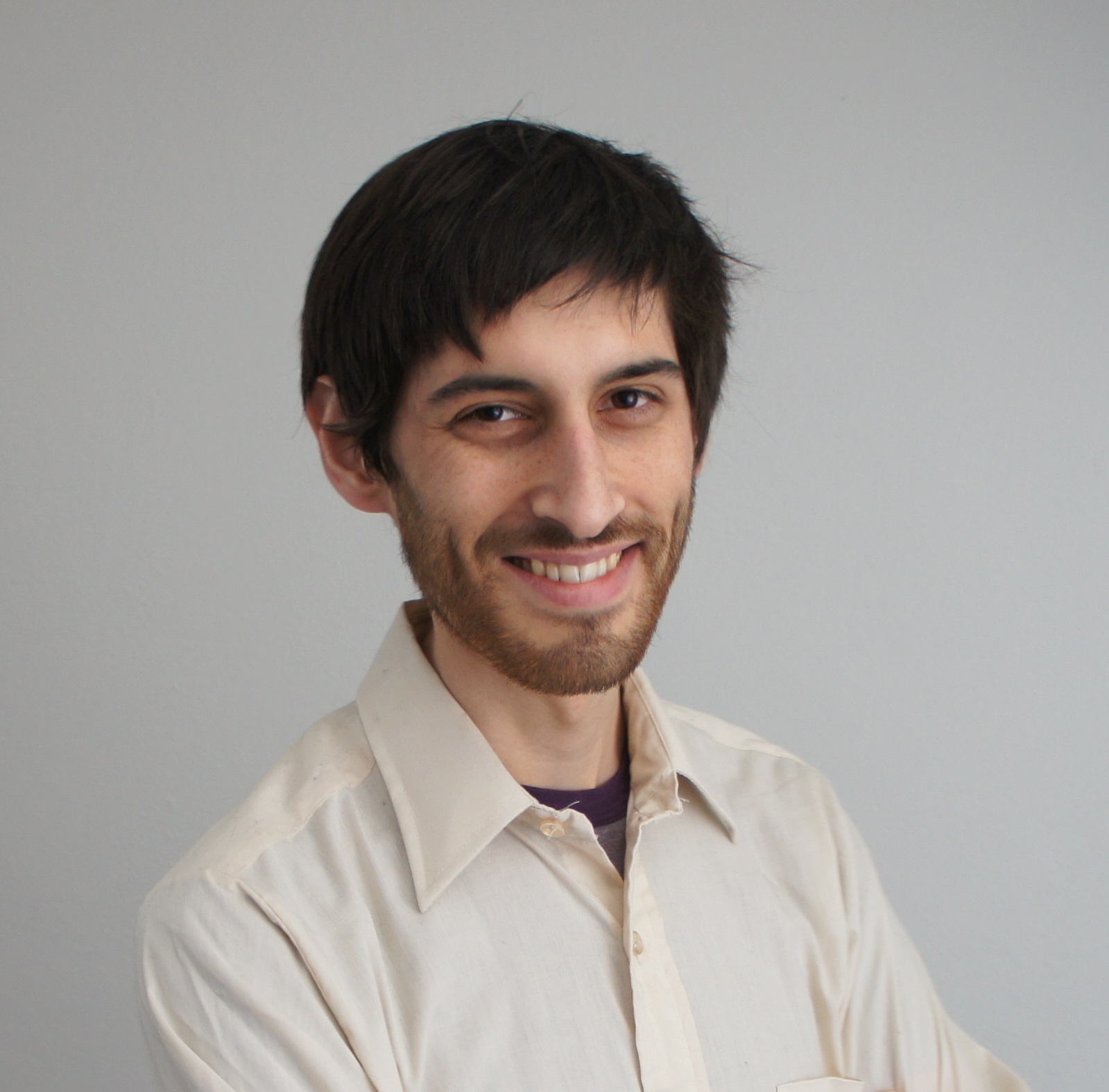
Klaus Schulten received his Ph.D. from Harvard University in 1974. He is Swanlund Professor of Physics and directs the Theoretical and Computational Biophysics Group as well as the Center for Macromolecular Modeling and Bioinformatics funded by NCRR/NIH, both at the Beckman Institute . He is also co-director of an NSF-funded Physics Frontier Center, the Center for the Physics of Living Cells. His professional interests are theoretical physics and theoretical biology. His current research focuses on assembly and function of supramolecular systems in the living cell, on membrane processes, on cellular mechanics as well as on the development of non-equilibrium statistical mechanical descriptions and efficient computing tools for structural biology. Honors and awards received by Schulten include: Distinguished Service Award, Biophysical Society (2013); IEEE Computer Society Sidney Fernbach Award (2012); Fellow of the Biophysical Society (2012); Award in Computational Biology (2008); Humboldt Award of the German Humboldt Foundation (2004); Nernst Prize of the Physical Chemistry Society of Germany (1981).

Klaus Schulten

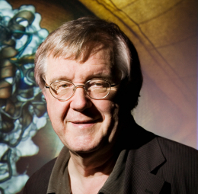
Professor Laxmikant Kale has been working on various aspects of parallel computing, with a focus on enhancing performance and productivity via adaptive runtime systems, and with the belief that only interdisciplinary research involving multiple CSE and other applications can bring back well-honed abstractions into Computer Science that will have a long-term impact on the state-of-art. His collaborations include the widely used Gordon-Bell award winning (SC'2002) biomolecular simulation program NAMD, and other collaborations on computational cosmology, quantum chemistry, rocket simulation, space-time meshes, and other unstructured mesh applications. He takes pride in his group's success in distributing and supporting software embodying his research ideas, including Charm++, Adaptive MPI and the ParFUM framework. L. V. Kale received the B.Tech degree in Electronics Engineering from Benares Hindu University, Varanasi, India in 1977, and a M.E. degree in Computer Science from Indian Institute of Science in Bangalore, India, in 1979. He received a Ph.D. in computer science in from State University of New York, Stony Brook, in 1985. He worked as a scientist at the Tata Institute of Fundamental Research from 1979 to 1981. He joined the faculty of the University of Illinois at Urbana-Champaign as an Assistant Professor in 1985, where he is currently employed as a Professor.

L. V. Kale

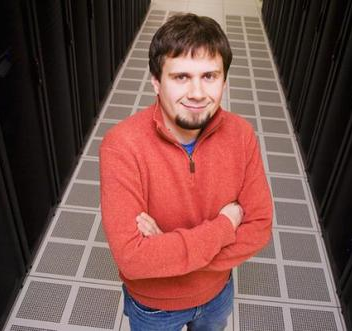
Currently William and Janet Lycan Professor of Chemistry at the University of Illinois at Urbana-Champaign (UIUC), Zaida (Zan) Luthey-Schulten received a B.S. in Chemistry from the University of Southern California in 1969, a M.S. in Chemistry from Harvard University in 1972, and a Ph.D. in Applied Mathematics from Harvard University in 1975. From 1975 to 1980 she was a Research Fellow at the Max-Planck Institute for Biophysical Chemistry in Goettingen, and from 1980 to 1985 a Research Fellow in the Department of Theoretical Physics at the Technical University of Munich. Her research interests, pursued via the Luthey-Schulten Group at the UIUC School of Chemical Sciences, include the evolution of translation, origins of life, physical bioinformatics, predication of protein structure and function with QR profiles, docking with steered molecular dynamics, VMD/Multiple alignment evolutionary analysis tools, and protein folding with a particular interest in hybrid molecular dynamics.

Zaida Luthey-Schulten

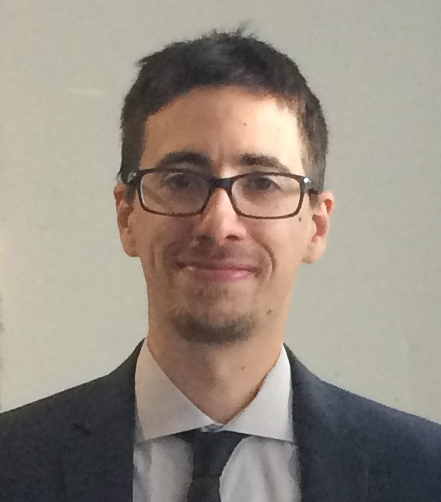
Emad Tajkhorshid earned his Ph.D. in 2001 from the University of Heidelburgh, before coming to a postdoctoral position at the Theoretical and Computational Biophysics Group. Now an Assistant Professor of Biochemistry and Biophysics at the University of Illinois at Urbana-Champaign, Dr. Tajkhorshid also leads the Computational Structural Biology and Molecular Biophysics Group at the Beckman Institute. His research focuses on structure function relationships in membrane proteins and understanding the mechanism of their function using simulation and computational methodologies. Examples of his research include the mechanism of permeation of water, ions, and other substrates through membrane channels; simulation of photoactivation in rhodopsin and other visual receptors; and, quantum mechanical calculations of the chromophore in bacteriorhodopsin.

Emad Tajkhorshid

Trained as a physicist, Jim Phillips has always gravitated towards the computational side of the field. During undergraduate summer internships he learned to program supercomputers and wrote software to visualize global earthquake and tomography data. In 1994, Phillips joined the TCB group as a graduate student, attracted by the opportunity to apply physical theory and high-performance computing to the problems of biology. Supported by Hertz and DOE fellowships, Phillips joined the NAMD team and learned the physical theory, numerical methods, parallel programming techniques, and biological applications of molecular dynamics simulation. The group's many experimental collaborations provided a stream of increasingly large simulations that drove the development of NAMD into a flexible, production-quality code. This work earned Phillips not only a Ph.D., but also a 2002 Gordon Bell Award for the parallel scalability of NAMD. Phillips remains with the group as a Senior Research Programmer, guiding NAMD development for the next generation of supercomputers, including the National Science Foundation's petascale machine to be installed at the University of Illinois.

Jim Phillips

John Stone has always liked a challenge. As a graduate student at the University of Missouri-Rolla, Stone developed ray tracing software on a wide variety of parallel computers. Early on, he collaborated with a fellow graduate student researching hypersonic air flow through jet engines by incorporating his graphics software into a computational fluid dynamics simulation code. For the first time, this allowed his colleague to perform in-place visualizations on the same parallel computer running the simulations, generating images of ongoing simulations in seconds rather than days. A decade later, Stone is still helping scientists uncover nature's mysteries. As Senior Research Programmer for TCB's Visual Molecular Dynamics (VMD) program, Stone develops state-of-the-art software that helps scientists visualize the structure and dynamics of large biomolecular complexes. Stone's parallel rendering system, Tachyon, is now used to render high quality images and movies within VMD, and is now part of the SPEC MPI2007 benchmark suite.

John Stone

Senior Research Programmer Kirby Vandivort started his career as a Nuclear Engineer and learned quickly that he found scientific computing very compelling. After receiving his Master's Degree in Computer Science from the University of Missouri-Rolla, Vandivort became a Teaching Fellow and taught several classes to undergraduate engineering majors. While teaching these classes, he developed computer programs such as a web-based gradebook program that both professors and students could use to record and track scores in classes. This program has been used by thousands of students over the past decade, and the knowledge that Vandivort learned proved invaluable for his work here in the TCB group. While teaching and writing programs, Vandivort learned about a job opportunity with the TCB group working on the cutting-edge collaborative project: BioCoRE. In 1999, Kirby joined the nascent BioCoRE team as a team leader. Since his arrival, BioCoRE has transformed from being a mere idea to a complete, web-accessible application that biomedical researchers can use to communicate, run supercomputing jobs, share molecular views, files, and simulation results. In 2007, Kirby started working on developing and implementing additions to VMD to enable Structural Systems Biology. This consists of features and extensions to VMD that are particularly applicable to large systems, and multi-modal systems.

Kirby Vandivort

Barry Isralewitz comes to software development as a simulation scientist who appreciates the power of a good tool. When he was a biochemistry undergraduate at Cornell University with an interest in programming, he worked on bioinformatics software for automating design and construction of multiple generations of recombinant DNA clones. Isralewitz set to switching fields to biophysics when he encountered computer simulations used to explore protein dynamics, a path which eventually led to graduate work in the TCB group studying large-scale protein motions with molecular dynamics (MD) simulations. In his doctoral work Isralewitz performed some of the earliest Steered Molecular Dynamics simulations, developing simulation protocols and additions to the TCB group's parallel-MD software NAMD needed for his studies, including titin extension and ATP synthase stalk rotation. Along the way to receiving his Ph. D. in 2007, Isralewitz also released software tools for VMD, the TCB group's molecular visualization software. Isralewitz's current software focus is Timeline, an analysis and graphing VMD plug-in for identifying events that take place during large MD simulations. Timeline displays temporally-changing attributes of a molecular structure as a 2-D box-plot linked to 3D structure display, with attribute values for each residue of a modeled system, or for other sets of system elements, plotted against time. Starting from an overview of all events for the entire structure, a user can zoom in to display the details of a few key residues over a brief time span. Once identified, notable events can be further explored with additional analysis methods and — particularly useful during coarse, initial examination of extermely large trajectories — by loading additional structure/trajectory detail around events and involved structures.

Barry Isralewitz

David Hardy has always had a fascination with computing and the logic required to solve problems through programming. Although he is also a trained pianist who began his undergraduate studies in music, his interest in mathematics eventually drew him back to the field of computation. Hardy earned his Ph.D. in computer science in 2006 under the guidance of Prof. Robert Skeel, a former principal investigator of the TCB group. Continuing work as a postdoc, Hardy's software development efforts include authorship of NAMD-Lite, a framework for developing molecular modeling software that was used to complete his Ph.D, and he has also made programming contributions to the TCB group's NAMD and VMD software. His research efforts include the development of faster methods for molecular dynamics and, more recently, the development of algorithms for the GPU acceleration of molecular modeling applications.

David Hardy

Ryan McGreevy started his undergraduate studies as a biochemistry major to learn more about the fundamental workings of life. Soon his hobby of tinkering with computers led him to take computer science classes, eventually adding it as a second major. During this time he worked several years in an analytical chemistry laboratory studying the environmental effects of methylmercury. Not sure if he was cut out for a life in a wet lab, Ryan was excited to learn from a bioinformatics course that computers were playing an increasingly important role in science. After graduating in 2009, he spent some time writing software for military flight simulators. He then came to the TCB group as a research programmer in 2010, to work on simulations of a different sort. Here he was able to utilize the knowledge of both his fields of study, applying computational methods to scientific inquiry. He currently works on the group's molecular dynamics flexible fitting (MDFF) method. MDFF takes high resolution X-ray crystallography structures of molecules and coaxes them into the lower resolution yet more natural conformations captured by Cryo-EM. Much of his work so far has involved implementing new restraints for use with MDFF. Molecules in an MDFF simulation experience deforming forces from the additional potential and require restraining forces to hold together certain structural elements. Ryan is also working on his master's degree in bioinformatics from the University of Illinois at Chicago.

Ryan McGreevy

Wei Han started his undergraduate studies as a chemistry major at Peking University. Having been interested in computer programming for many years, he decided to choose computational chemistry as his graduate major. During his graduate research, he focused on computational characterization of conformational features of various peptides, including synthetic beta peptides and disordered amyloid-beta peptides, with help of his programs for conformational search and network analysis of free energy landscapes. He also helped to resolve self-assembled channel structures with small molecules synthesized by experimental collaborators. After his PhD studies in 2008, he began to develop a multiscale coarse-grained (CG) force field to study peptide conformations in water and membrane, aiming to accelerate simulations at long timescale. In 2011, he joined TCBG as a postdoctoral researcher to study chemical and biophysical phenomena with computer simulations. He currently continues to improve his CG model for simulations of protein folding, peptide aggregation and dynamics of membrane proteins. He also works on implementation of his CG model in popular NAMD simulation software.

Wei Han

Juan R. Perilla started his undergraduate studies as a physics major at the Universidad Nacional de Colombia. Marveled by the complexity of living systems, he decided to devote his graduate studies at Johns Hopkins University to biophysics. During his PhD, Juan developed different methods that have been successfully applied to sample conformational transitions for systems of different sizes and complexities. Juan also developed methods for the analysis of long simulations of large macromolecules by using nonlinear analysis and information theory. While at Hopkins, Juan saw the opportunity to work in both clinical and basic research that could have a direct impact on human health, that is why in collaboration with structural biologist he studied the dynamical properties of the epidermal growth factor receptor (EGFr), a well known oncogene associated with different types of cancer. At the Johns Hopkins Hospital, Juan worked shoulder to shoulder with physicians and scientists at the Epilepsy Center in the neurology department. In the center, Juan developed new procedures and methods for the reconstruction of medical images, and the analysis of EEGs allowing the accurate localization of epileptic seizure foci by the use of subdural electrodes in human patients. Juan joined TCBG in 2011 in order to continue his studies on living systems. Juan is trying to understand the uncoating mechanism of the HIV-1 capsid, a step that is crucial to the replication cycle of the virus. He is also studying the conformational pathways that lead to the insertion of proteins into membranes. Juan is working on bringing his methods into NAMD and VMD.

Juan Perilla

Coordinator of Research Programs Nancy Mallon came to the Beckman Institute in 2004 to work in the Business Office for the Grants team. There she learned policy/procedures and reviewed proposal submissions to federal agencies such NSF and NIH and worked closely with these agencies from submission to closeout. Having three children in college they encouraged her to "go back to school" and she received a B.S. degree in 2005 from Eastern Illinois. When the opportunity arose in 2009 to work for the Theoretical and Computational Biophysics Group (TCBG) it became a blessing in disguise since math and science were never her strongest subject matters. Nancy is the Administrative support for all TCBG staff working on grant proposals, human resource issues, and all budget matters. Working with the diverse and talented group of Graduate Students and Post Docs to Research Programmers makes each day very enjoyable and rewarding.

Nancy Mallon

Ilia A. Solov’yov has obtained a Ph. D. degree from Frankfurt University (Germany) in 2008 and a Candidate of Science degree in theoretical physics (equivalent to Ph. D.) from the Ioffe Physical-Technical Institute in St. Petersburg (Russia) in 2009. His research interests cover a broad range of questions on structure and dynamics of nanostructures and biomolecules as reflected in the list of publications. More specifically, Ilia is actively involved in research on magnetoreception in living organisms, especially birds, which fascinates him alot. Ilia defended his PhD thesis on this subject and continues working further in the field. The question how weak magnetic field, i.e. comparable with the Earth's magnetic field, can be detected in animals, and control their behaviour is one of the key goals in his further research. Another topic of Ilia’s research interests is related to the study of conformational changes, fragmentation and phase transitions in bio- and macromolecules from the physical point of view. Finally, Ilia is also interested in study on structure, stability, energetics and growth, processes in nanosystems of varied degrees of complexity. In the last years Ilia was a co-author of a series of papers devoted to the study of atomic nanoclusters, carbon nanotubes and fullerene-based nanowires, which formed the basis of his second PhD thesis.

Ilia Solov'yov

Rafael C. Bernardi concluded his PhD in Biophysics, in 2010, at the Carlos Chagas Filho Institute of Biophysics at Federal University of Rio de Janeiro (Brazil), advised by Prof. Pedro G. Pascutti. With a major in Physics (2005) and a Master degree also in Physics (2007), Rafael did an internship in 2008, during his PhD studies, at the University of Pennsylvania, in the Center for Molecular Modeling, working with Prof. Michael L. Klein and Prof. Werner Treptow. During his PhD, Rafael worked mainly with molecular dynamics studies of anesthetics and their effect in both biological membranes and the TREK-1 potassium channel. This work awarded him the Best Thesis Award in Biophysics and Biotechnology in 2010 by the Secretariat of Strategic Affair of the Brazilian Presidency. He is also a collaborator in several studies simulating biological membranes, and was responsible for the first QM/MM dynamics of lipid membranes in which some lipids were studied in the DFT level. For the last couple of years, Rafael has been working with molecular modeling of cellulose, cellulases and cellulosomes, first at INMETRO (Brazil), in a group that aims to develop a new second-generation biofuel, and more recently, at TCBG.

Rafael C. Bernardi

Zhe Wu received his Bachelor degree from the University of Science and Technology of China, and obtained his Ph.D from the University of Wisconsin – Madison in 2012 (co-advised by Arun Yethiraj and Qiang Cui). Interested in understanding various biophysical phenomena with theoretical approaches, he focused on both computational model development and biomolecular simulations. Specifically, he is the developer of the BMW-MARTINI coarse-grained force field, and he contributes in understanding the origin of entropy driven hydrophobic interactions in water, the ion Hofmeister effects in water dynamics, and the microscopic mechanisms in peptide-induced membrane remodeling process. As a continuation of his endeavor, he joins the TCB group in 2012 as a postdoctoral fellow in the Center for the Physics of Living Cells, and his study will mainly focus on extending understandings in the membrane fusion processes.

Zhe Wu

Danielle Chandler received her Ph.D. from the University of Illinois in 2011. Her graduate work was split between two projects. The first project centered around membrane reshaping by light-harvesting complexes in the chromatophores of purple photosynthetic bacteria. The second project involved modeling the p7 viroporin, a potential drug target, in the Hepatitis C virus. She continues to work as a postdoc in the TCBG modeling large photosynthesis-related systems, including a 100-million-atom model of a full photosynthetic chromatophore.

Danielle Chandler

Lela Vukovic received her B.S. (2005) and Ph.D. (2012) degrees from the University of Illinois at Chicago. Her graduate research focused on mechanisms of nanoscale motility, and self-assembly of polymers (into nanomedicines) and nanoparticles. During her graduate studies, she became fascinated with the way that computational methodologies can uncover functional mechanisms of biomolecular machinery in live organisms, and cast them as movies. Her interest in biophysical research lead her to visit the Max Planck Institute for Biophysical Chemistry (Goettingen, Germany), where she studied the dynamics of the photo-excited chromophores. She joined the TCB group as a postdoctoral fellow in the Center for the Physics of Living Cells, where her research will focus on understanding the bacterial filaments and the processes mediated by them.

Lela Vukovic

Christopher Mayne received his Ph.D. in Chemistry from the University of Illinois (2011) in the laboratory of Prof. John A. Katzenellenbogen. Chris's thesis research focused on the computer-aided design and chemical synthesis of ligands targeting the estrogen (ER) and progesterone (PR) receptors for use as anti-cancer, anti-inflammatory, and tumor-imaging agents. In 2011, Chris joined the Tajkhorshid laboratory at the Beckman Institute as a postdoctoral research associate, where he utilizes molecular dynamics (MD) simulations to study the effects of sequence mutations on agonist and antagonist conformations of ER-ligand complexes, and develops the Forcefield Toolkit (ffTK)--a VMD plugin that aids users in parameterizing small molecules for use in MD simulations. Most recently, Chris has joined the TCBG software development team where he will continue to develop VMD plugins that facilitate the application MD technologies towards drug discovery.

Christopher Mayne

Abhi Singharoy received a Bachelor's Degree from Saint Xavier's College, University of Calcutta in 2005. He completed his Master's degree from the Indian Institute of Technology Bombay in 2007 before moving to Indiana University Bloomington for a PhD in Chemistry under the auspices of Prof. Peter J. Ortoleva. The underlying theme of his research is to delineate ways in which laws of physics and chemistry operate across a diverse range of scales in space and time to yield biologically relevant structure and function. Specifically, his work focuses on the develoment of multiscale methods that extend all-atom simulations of macromolecular systems to biologically relevant timescales. This technique is applied to the computer-aided design of vaccines against the Human Papilloma Virus. In 2013, he joined the TCB group as a Beckman postdoctoral fellow. His immediate endeavor involves developing a Molecular Dynamics Flexible Fitting software that interprets poorly resolved structures from X-ray crystallography experiments.

Abhi Singharoy