Training
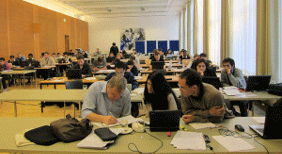
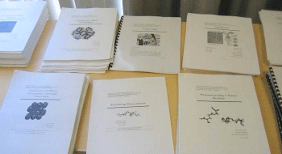
| The Center recognizes the vital importance of training for the education and professional growth of scientists. With so many techniques and technologies, researchers must continuously learn new and better ways of completing research, and should always be on the lookout for new tools to use and new ways to use existing tools. Below are links to training opportunities and resources developed by the Center. |
| Workshops | Tutorials | Case Studies | ||
 |
 |
 |
||
| Multimedia Lectures | Brochures & Media Coverage | Related Resources | ||
 |
 |
• Articles on teaching science using VMD and NAMD • Graduate student and postdoctoral associate contributions to training • Subscribe to TCBG's training news mailing list by clicking here or see here for details • Classes taught by TCBG faculty |
| Recommended article for all visitors: TCBG Director Klaus Schulten's article "To students contemplating research in biomolecular modelling" |